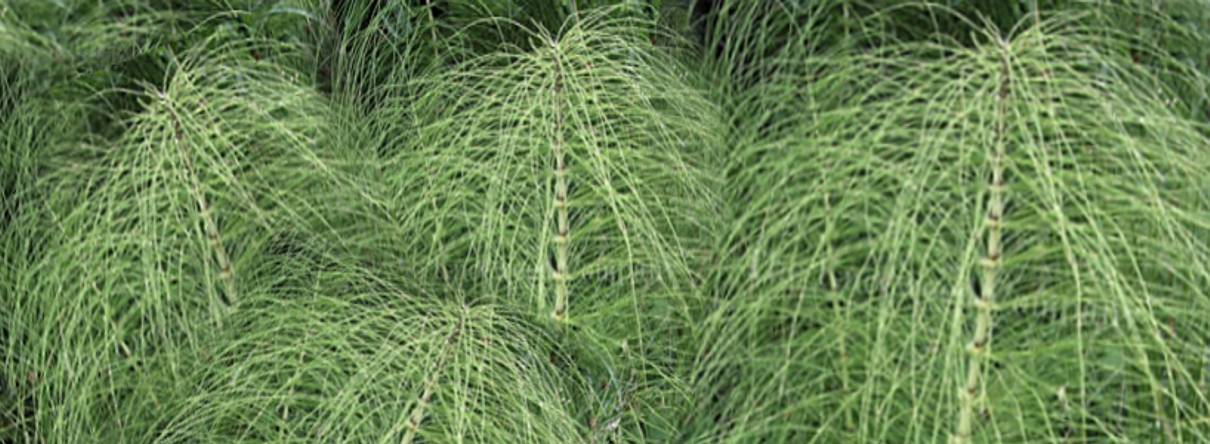
Field Horsetail
Field horsetail is a perennial (i.e. lives for three or more years) and spreads by means of rhizomes that are often too well rooted to successfully dig out without mechanical assistance. These rhizomes can reach as deep as 2 metres below the surface, are black to dark brown in colour and are often difficult to spot in the soil (and therefore extremely easy to accidentally sever) if attempts are made to dig them out. Severed rhizomes can regenerate to produce new growth.
Horsetail produces two distinct forms of top growth. The first, produced during the spring, is a long, roughly cone-shaped structure around 2.5cm in height that appears at the top of a tough, wiry stem. From these structures millions of spores are released, which spread the plant quite effectively to adjacent areas. Once the spores have been released, the stems die off and are replaced by taller (up to 60cm), dark green shoots that, once matured, develop into the better known distinctive horsetail shape. The ‘leaves’ that sprout from the stem are whorled, green, needle-like branches that are slightly reminiscent of horse’s tails or bottle brushes. These die off in late autumn, and horsetail survives the winter by storing all of its nutrients within the substantial rhizome system.
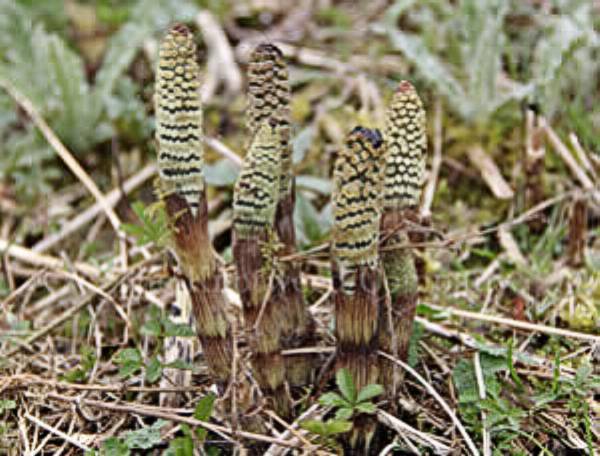
Young Field Horsetail shoots
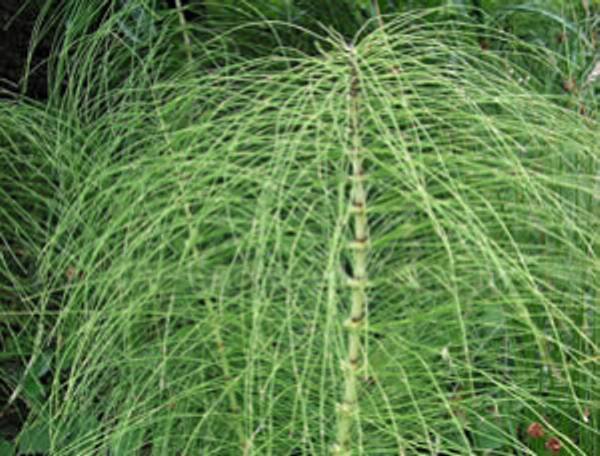
Field Horsetail
Although horsetail has been regarded as a useful species – being used in ancient civilisations for cleaning pots and polishing wood, and seen to have great medical benefits by the Romans, Greeks and Chinese – it is seen today (as with common ragwort) as a threat to the health of livestock – especially horses. Whilst having only a moderate toxicity to most animals, horses are seen to be particularly susceptible to the Thiaminase toxins found within the plant tissue. All parts of the plant are toxic whether eaten fresh or dried, although dried plants may be more poisonous. Clinical indications of horsetail poisoning can include weight loss, depression, unsteady gait, muscle twitching, inability to stand, constipation and seizures. Horsetail poisoning can lead to death if the animal is not properly treated. It has been calculated that only three weeks of a diet comprising 20-25% horsetail can lead to clinical symptoms. Another impact horsetail can have is to cause damage to the built environment. Shoots can exploit weaknesses in man-made structures and it is not uncommon to find horsetail growing through tarmac or cracked concrete.
Field horsetail is almost impossible to eradicate. Digging out usually results in rhizome fragments remaining in the soil, so the plant simply grows back again – usually with an increased number of shoots. The plant is highly resistant to herbicides, with most having little effect other than burning off the outer surface of the branches. In areas where the spores are allowed to be produced, substantial spread can be seen the following growing season. The use of heavy duty specialist root barriers can help protect vulnerable surfaces and it may be useful to lime the soil to increase the pH, as this will assist in limiting horsetail growth.
Taylands can provide advice and assistance in the control and containment of horsetail growth, but cannot offer guaranteed treatment programmes due to the unpredictable long-term results of such programmes.
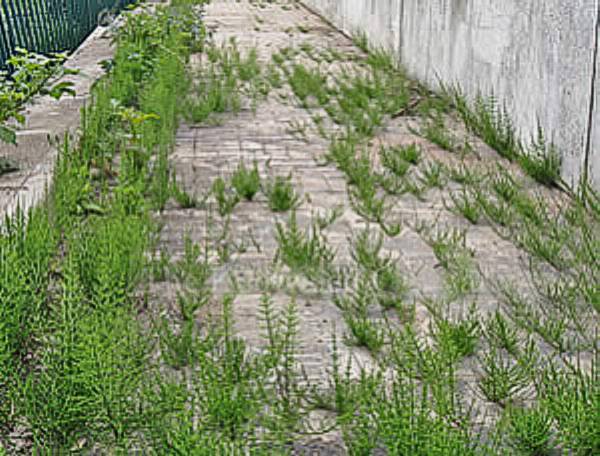
Field Horsetail growing through path
Contact Taylands to discuss your specialist needs.
For a confidential discussion and quotation either email brian@taylands.co.uk or call 07923 034555
Taylands Limited
39 Croft Way
Weedon
Northamptonshire
NN7 4QX

Invasive Plant Consultancy





Copyright © 2026 All Rights Reserved - Taylands