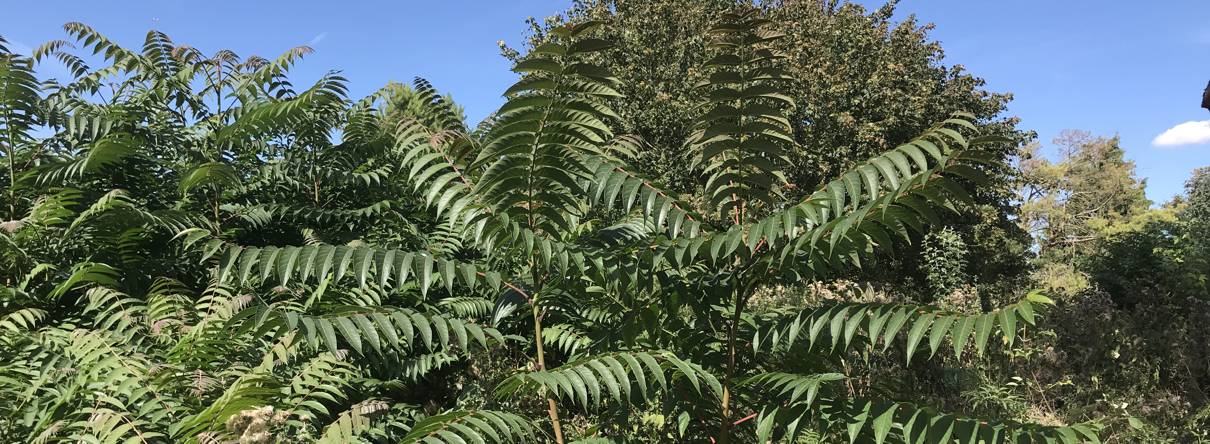
Giant Hogweed
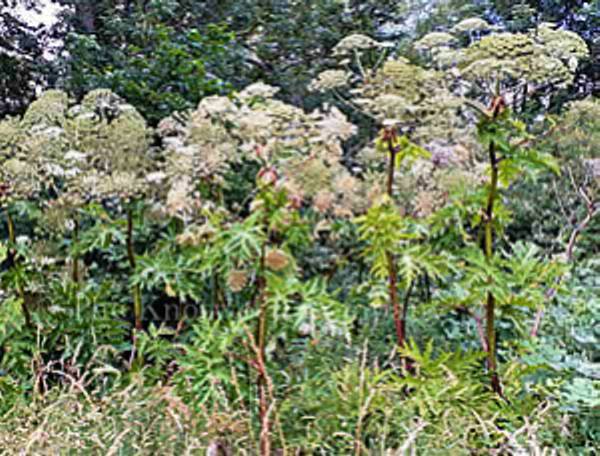
Giant hogweed is (or should be) a serious concern for landowners, as the sap photosensitises on human and animal skin. Severe and painful burns are common following exposure and full recovery from these effects can take months or even years; permanent scarring of the skin could also result. More severe effects of exposure to the sap are not unknown: blindness (permanent or temporary) has been reported, as has death. To be affected by giant hogweed takes simple contact with either the sap or the hairs on the leaves and stems – and the sap can soak through clothing. Therefore, ANY exposure to this plant can lead to harm. The sap does not irritate or burn and so victims can often be left unaware that they have been affected until it is too late. The burns and blisters appear several hours later and are worsened by the length of time a person continues to be exposed to the sun’s rays after contact with the giant hogweed.
Giant Hogweed
Giant Hogweed
If anyone has been exposed to the sap, recommended first aid includes:
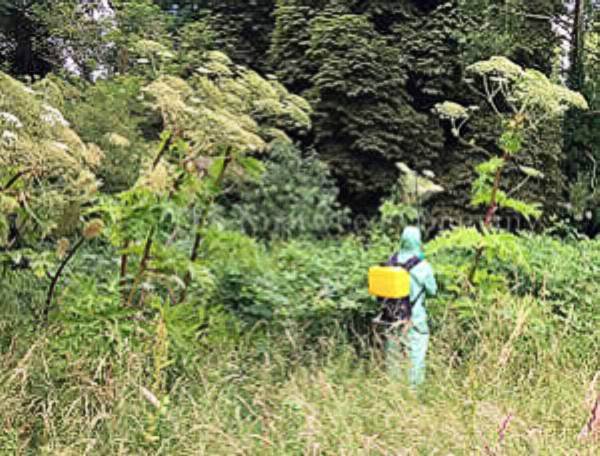
Treatment of the giant hogweed plants is a fairly simple matter in that it is susceptible to several professional herbicides. It can be killed quite successfully, following 1-2 treatments, especially if it is treated in its earlier leafy state prior to producing any stems and flower heads. However, it does require a suitable risk assessment and protective clothing is required. Such clothing may need specialist disposal if contaminated with giant hogweed sap.
While the growing plants may readily be killed, the dormant seeds may take up to 5 years to grow, so annual visits to kill new seedlings will be required for at least this period if any giant hogweed is likely to have seeded previously in the area. If the giant hogweed was situated next to a waterway, future re-establishment of new seeds is always a possibility if hogweed remains untreated further upstream.
On construction sites (and other sites where the timescale for treatment is limited), other methods (such as excavation and disposal) can be considered. However, all treatments require an initial herbicide treatment and at least 3-4 weeks to allow the plant to die before works can start safely.
Taylands are experienced in the treatment and removal of giant hogweed. Please contact us if you require assistance in this regard.
Taylands Limited
39 Croft Way
Weedon
Northamptonshire
NN7 4QX

Invasive Plant Consultancy





Copyright © 2026 All Rights Reserved - Taylands