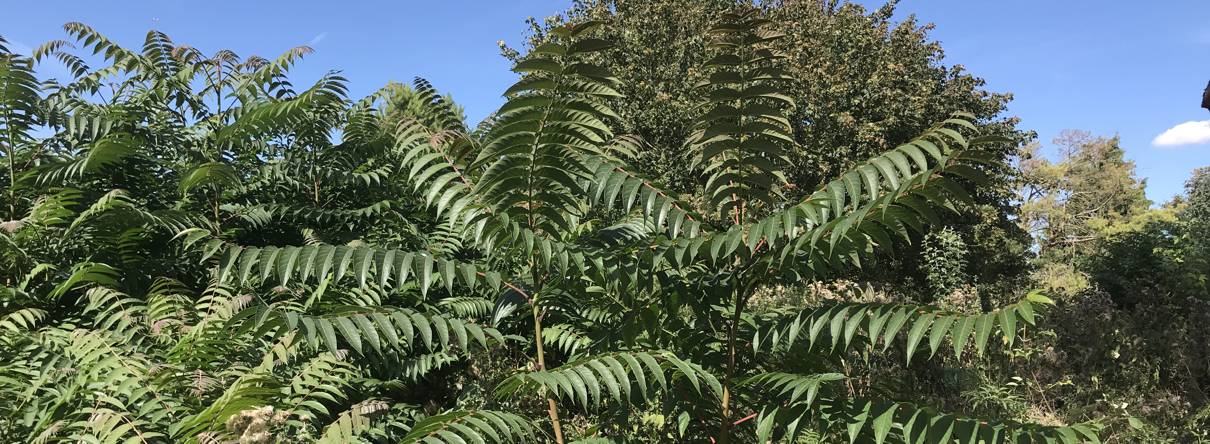
Himalayan Balsam
Himalayan balsam (Impatiens glandulifera) grows in dense colonies and thrives in moist environments. It is most often found along rivers, streams, lakes and in damp woodland environments. It dominates any area where it becomes established and can be responsible for riverbank erosion during the winter when the plants die off. This can have a detrimental knock-on effect on various aspects of riparian ecology. It is also highly attractive to pollinating insects, usually to the detriment of surrounding competing species.
Himalayan Balsam is listed in the Invasive Alien Species (Environment and Permitting) Order (2019), as such it is strongly recommended that suitable control measures are put in place to ensure that the plant does not spread from site.
Himalayan balsam is the tallest growing annual weed in the UK (an annual plant is one that grows from seed, flowers and dies within the same growing season). Height can vary, with some plants as small as 30cm and others up to 3m when flowering. Flowers are distinctive, with their elegant slipper shape leading to one of the plant’s colloquial names; ‘Policeman’s Helmet’. Colours of the flowers can vary, from white to a dark pink/purple, and they are in evidence by mid-summer.
Seed pods form around June or July and they swell and distend as the seeds develop within them. Each seed pod typically contains between 4 - 16 seeds and it is possible for each individual plant to produce up to 2,500 seeds. When the seed pods are ripe, any disturbance of them triggers the explosive release mechanism – walking through a dense colony with ripe seed pods can be an interesting experience! Seeds are often transported by rivers and streams (reaching over 10 km in some cases) but can also be spread by human interaction.
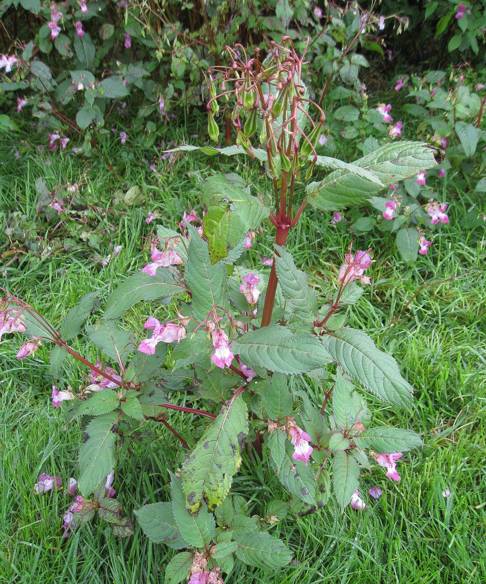
Himalayan Balsam in bloom
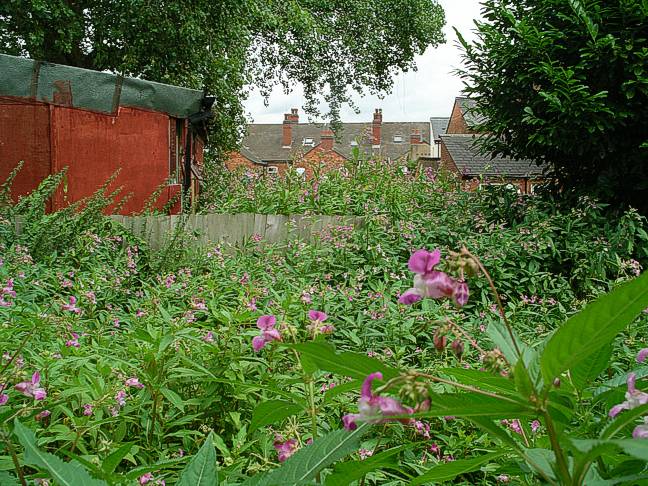
Himalayan Balsam growth
Control measures are quite straightforward. There are mechanical methods, in which the plants are either pulled up or cut to ground level before they set seed (commonly referred to as 'balsam bashing') or chemical methods using an approved herbicide. The seed bank persists for 18 months to 2 years, so control measures must continue for this period.
Consideration of reinfestation from outside of the site must always be considered. On riverbanks, if balsam is thriving upstream, each year will see a new supply of seeds washing up on the bank. Seeds can also be spread by animals, people, etc. and so it is possible ongoing annual control measures will be required each spring or early summer to keep the balsam at bay. Revegetation, particularly of riverbanks, should also be considered following balsam removal to prevent erosion and to reduce the risk of future reinfestation.
Taylands can provide a survey and treatment options for Himalayan balsam as required.
Contact Taylands to discuss your specialist needs.
For a confidential discussion and quotation either email brian@taylands.co.uk or call 07923 034555
Taylands Limited
39 Croft Way
Weedon
Northamptonshire
NN7 4QX

Invasive Plant Consultancy





Copyright © 2026 All Rights Reserved - Taylands